Want to be a great writer? The secret is other people (and practice)
Have you heard of the 10,000 hours hypothesis? It was first proposed by music theorist Anders Ericsson in the 1980s; the simplified and popularized interpretation of his work suggests that if you dedicate your time to something for 10,000 hours you’ll become an expert or virtuoso.
I wondered if it meant that here in Britain we might all be virtuosos at talking about the weather or queuing. As with most things the headline only scratches the surface and the reality is a little more complex.
Ericsson was motivated by an interest in what made someone great at what they do, and what separated them from those who were just very good. He interviewed students studying violin at the elite Music Academy of West Berlin and found that their greatness was closely correlated with the amount of time they spent practicing.
Every professional musician he interviewed had practiced for at least 3 hours a day, every day for 10 years. What he found was, that rather than being simply born “gifted”, the more people practiced the better they were.
Of course, you have to start with a baseline of innate talent, but it was graft that separates the Mozarts and Bachs from the Tom, Dick, and Harry’s.
What can you and I learn from this study? How can it improve our own writing talent and ability?
On a more practical level, it means that you should never beat yourself up in the early part of your career. You can’t hope to be as good as those you aspire to be straight away, it will take time.
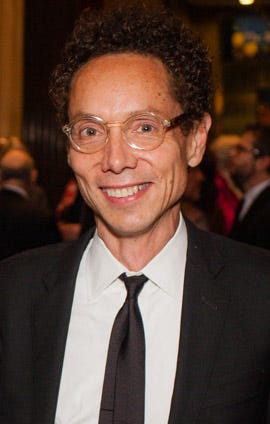
The multi-award-winning, highly influential, and multi-million bestselling Author Malcolm Gladwell, for example, has been a staff writer with the New Yorker since 1996 and he’s been writing professionally since the 1980s.
Many critics have dismissed the 10,000-hour rule stating that there are so many caveats to the idea, that it falls apart. For example, my washing up hasn’t really improved, nor has my skills at putting out the recycling nor do I clean the toilet with any flair and ask for my desk tidying skills — forget it.
What I am trying to say is that, of all the deciding factors, enjoying the activity has to be paramount. For each of these domestic tasks, I have been doing the same thing in exactly the same way for twenty or perhaps thirty years. I’ll never become great — which is why I have a dishwasher.
I personally assume that bad teaching can hamper progression too — which is why you should always question the advice you receive (yes, even mine). I was once given some friendly advice by a family member to, “perhaps give up writing”, just before receiving a book deal for America’s largest independent publishing house for my last book.
I feel like I’m always learning and have been lucky enough to have many great writers amongst my group of friends. But, about three years ago I discovered a real gem — something that I think helped me secure a five-figure Arts Council England grant and a magazine column.

I learned if you want to be the next Malcolm Gladwell, or even (the other) Andy Hamilton, the trick is to keep looking at where you are going wrong and look at ways to improve it. Think about that next time you fail.
The epiphany happened when I set about recording what I thought would be a podcast for writers. The idea behind the podcast was to help writers at any stage in their career by interviewing people in the trade. I wanted to find out how other writers tick, and what editors and agents want from their writers. (I still intend to release it one day, so watch this space).
I interviewed three writers, Adharanand Finn, Bruno Vincent and Lois Pryce; along with my agent Kate Johnson and Susanna Wadeson, my editor for Booze for Free and Brewing Britain.
Instead of a few light-hearted chats with old friends, I found I confronted deeply-held beliefs that were holding me back. I learned more in those few hours from these great teachers than I ever would have from hours of bashing away at a keyboard.
The most rewarding piece of advice was from Bruno who suggested that all great writers get, and learn from, feedback- so please do feel free to praise, tear apart, or generally comment on this post.
I found it hard to show work in progress to anyone other than my partner. On the back of his advice, I joined a writers’ group. I’ve made great friends and I hope I’ve become a better writer.
I’ve also employed Guy Bass as a mentor to help me with a children’s fiction book that I’m writing. To say that this helps me find errors would be a simplification. It does more, much more — it helps me to think about the craft of writing and how my words come across.
It helps rid me of any doubt or arrogance I might have in my ability and, at the risk of sounding like a self-help marketing guru, it has supercharged my writing. If there is any advice I want to give to new writers it would be to get someone else to read it.
If she has time, I get my partner to read my stuff too — she’s read through this twice. Over the last seventeen years I’ve got better at receiving sometimes harsh criticism (“this isn’t your best work”) and she’s got better at sensing my mood (“Have you eaten?”) — and therefore my receptivity to feedback.
Remember, giving feedback is a skill that can be learned too. Try to take on board how much practice your feebacker has had when you are listening to their advice.
Both Lois and Adharanand have supportive partners too, whom they say are a great help. Bruno has developed a supportive relationship with his parents and over the years they have all got better at the feedback process.
These three, like me, are all published authors with the main publishing houses. This means we all have at least one proofreader checking our spelling, syntax, and grammar. A line editor who will look for things like the repetition of words, they’ll help to iron out any inaccuracies or sentences that just don’t read well. This is on top of a first check by agents and feedback from commissioning editors.
But that’s all polish as, long before that stage, a manuscript needs to shine on its own to even get noticed by agents and/or editors. For that, you need feedback. I’ve got into the habit of turning to the acknowledgment pages of all books I read and I’ve noticed something interesting — the better the book the bigger the list of names of people who helped create it.
If the acknowledgments are anything to go by then one of the best children’s books I’ve read recently, The Dragon with A Chocolate Heart by Stephanie Burgis had twelve readers during the first drafts, then five more after submitting the manuscript to the publisher. Seventeen people helped to make that book brilliant.
This is not to discredit Stephanie — on the contrary, it must have taken a huge amount of humility, patience and faith in herself to be able to pick the good advice from the bad and to take that much criticism on the chin.
Now, I am sure you are a good writer, but do you want to be great? You are at least doing one thing right, by reading articles such as this, you are learning about the craft. But if you want to supercharge your work then learn to take criticism and learn to give it, too.
So, please keep writing, get to that 10,000 hours and keep listening to others. And I’ll look forward to meeting you as we sign our bestsellers side by side.
Writers’ clubs and how to find them
I found my writers’ club through my friend and fellow author Mike Manson, writers tend to hear about what is going on in the city through osmosis. If you have a writer friend ask them if they know of a group that has space for a keen student.
Don’t know any authors? I’ve just searched for writers groups across the world, using random city names and there are plenty. I’ve also found a bunch of online free resources. Good luck and happy writing.
Want to help me and other writers? All the books I’ve mentioned can be bought from Bookshop.org and with each book you buy the maximum goes to the author and I also get a small commission. What do you get? Some cracking good reads, and the warm glow inside that you are keeping the trade alive.
Thanks
Andy Hamilton