The Carrot family – the mafia of the plant world
Plant families are a strange thing to get your head around when you first start to learn botany or foraging. Related plants can show very different traits, roses, apples and goatsbeards are all related for example – think about that next time you bite into an apple does it remind you of a goat with a beard? Lettuces, marigolds and dandelions are all related too – that seems even stranger.
Then there is the Apiaceae family, or carrot family, a plant family that is home to some of the tastiest most widely eaten crops along with some of the most deadly which can’t be right, can it? Well, if you think of each plant family like a regular family, with some similarities and some very different traits then that’ll help it all make sense.
I’m sure that most towns and cities across the planet will have a family whose power and influence spreads throughout the town. They might own a few businesses; restaurants, shops, and garages for example. You might first come into contact with them at school. This is where this kind of family can thrive. They’ll have a few cocksure members who’d swagger around the playground acting invincible as you know they have a “hard” uncle or “rock hard” cousin. This sort of family certainly existed in my hometown of Northampton. Just one family had control of the playground, in the guise of a few school bullies. Many of the legendary tales of petty crime seemed to always mention the same family name too and small vans drove around the town with that name emblazoned on the side – they had power. Yet (I’m told that) some of the members were kind, caring, good people.
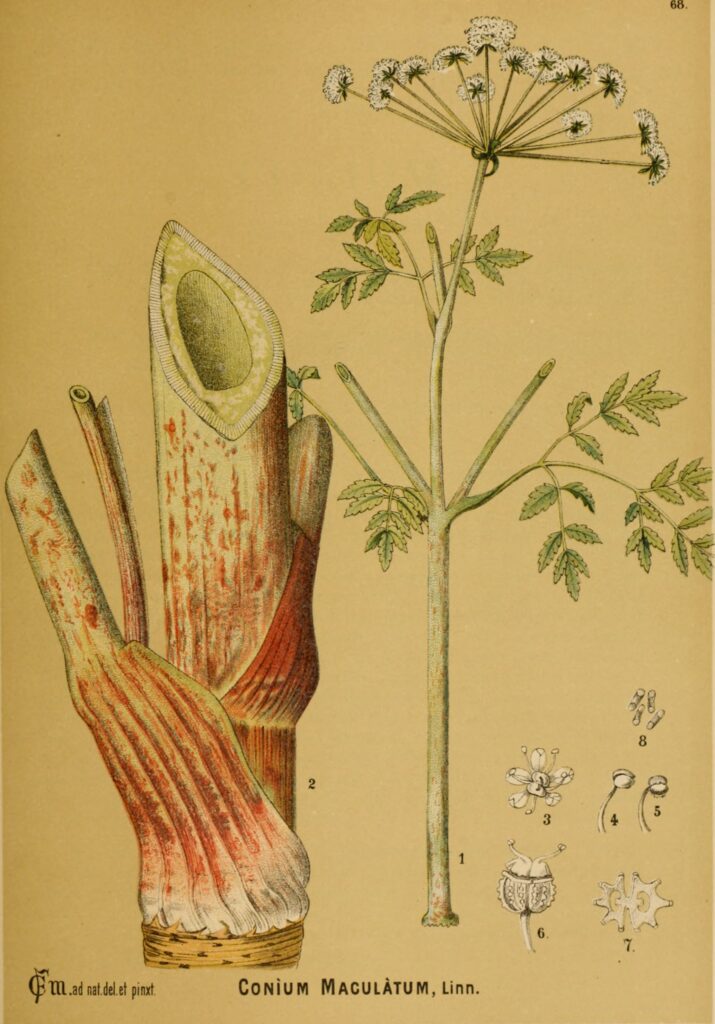
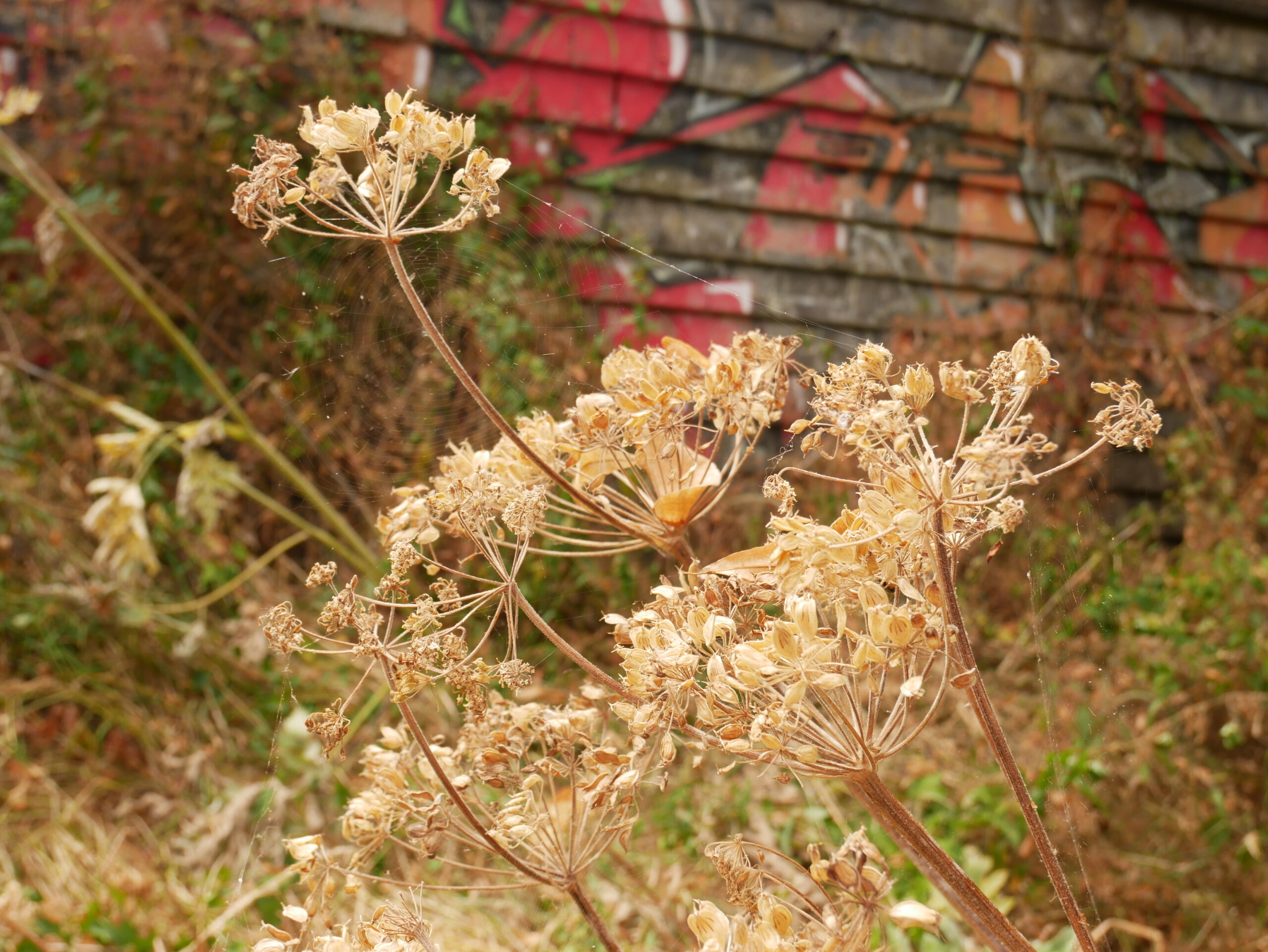
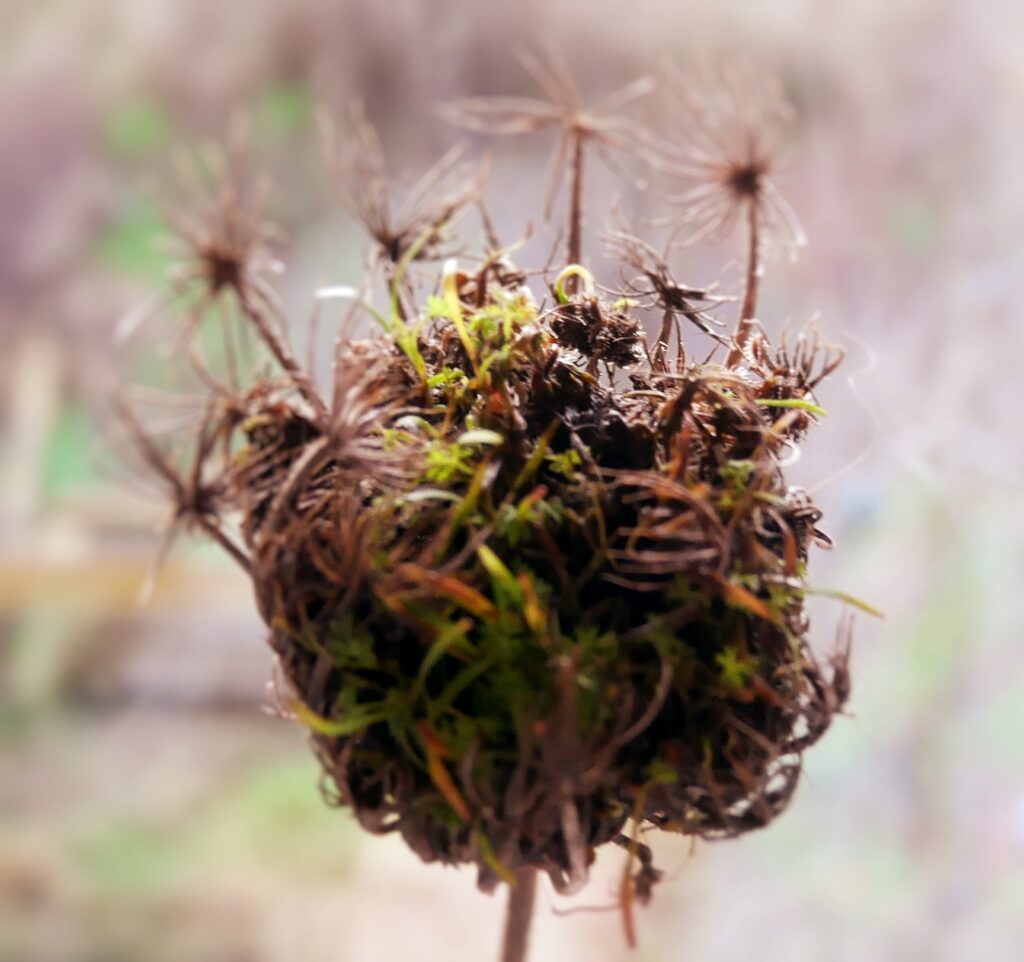
Just like the 16th largest family of flowering plants with almost 4000 members spread across the world – the Apiaceae family. Even if you are not a forager, I’m still certain that you will have eaten a plant from this family in some form or another as it includes; parsley, carrots, parsnips, dill, and coriander in its clan along with wild plants such as cow parsley, common hogweed and wild carrot. These are the kind members; the members of the family that you’d welcome in a bowl of soup or on your plate. Yet, just like my hometown mafia, it has a darker side, a side that can cause damage. Not just content with stealing your lunch money the highly toxic hemlock Conium maculatum L (see botanical image) and the invasive and toxic giant hogweed Heracleum mantegazzianum could give you a one way ticket to the hospital.
The Apiaceae was one of the first families of plants to be recognised as a group distinct from other plants, way back in 1586 by Jacques Daleschamps in his Historia generalis plantarum. In many ways I wish it was the first family of plants that I ever learned as I now believe that it is a great idea to get to know the plant that will kill you or make you ill before you get to know the plants that you can eat. That way you can go out foraging with some confidence that you’ll be ok. Instead, I stayed well clear of them I didn’t trust myself enough not to make a mistake. I really missed out.
I also stayed way clear of the mafia style family for years despite close friends telling me that certain members were ok and worthy of my friendship. It felt easier to dismiss them all. I ponder that decision as I ponder the times I spent in the carrot family wilderness.
As I’ve got to them (the plants) I’ve come to understand sweet Cicely’s charms in drinks, hogweed’s versatility in the kitchen, and the optimism that cow parsleys’ appearance brings in the late winter when nothing much else is growing. Each plants opens up a cavernous realm of possibilities.
I think plants have helped me become more open-minded. I believe that the act of foraging has lead me to a daily, mental act of contemplation that has helped me to reach that point. Foraging gives me a welcome respite from the frantic world of social media, ai, finance, work, roads and, all the other man made mini hells of our own creation. Perhaps if I’d foraged more in my school days then I’d have a whole extra family of friends. Maybe I’d have sooner understood the complex reasons that people turn to the “dark side”. I know I don’t dismiss a group of people or plants for a few individuals anymore.